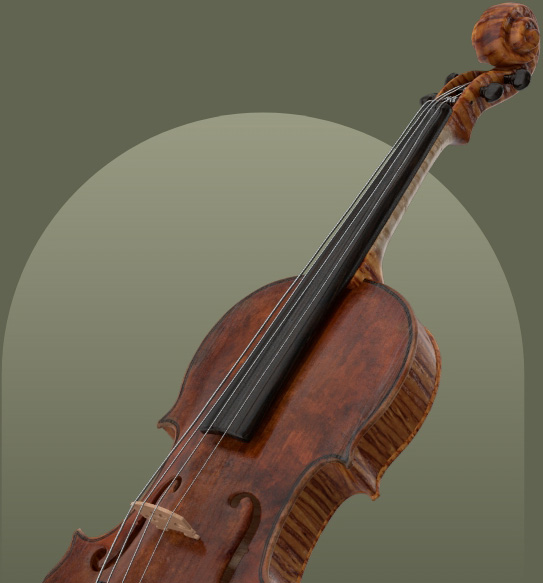
Don Nicola Marchioni (Don Nicolo Amati)
Bologna, 1662–1752
Request an expert valuation or learn how our global auctions achieve the highest prices for your instruments.
Auction Price History
Highest auction price
19 results
| Type | Details | Auction house | Sold | Price |
|---|---|---|---|---|
| Violin | Labelled D. Nicolaus Amati, fecit Bononiae 1730 Lot 101 | Tarisio | May 2024 | £22,322est. € 20.000-30.000 |
| Violin | 35.9 cm Bologna, 1735 c. | — | October 2011 | £27,500 |
| Violin | 35.6 cm Bologna, 1740 c. Probably by | — | March 2009 | £5,400 |
| Violin | 35.2 cm Bologna, 1750 c. (head later) | — | October 2008 | £9,945 |
| Violin | 35.8 cm Bologna, Late 18th C. (scroll by another hand) | — | October 2008 | £11,569 |
| Violin | 35.6 cm Bologna, 1720 c. Probably by | — | June 2008 | £5,632 |
| Violin | 35.8 cm Bologna, 1725 | — | May 2008 | £22,450 |
| Violin | 34.1 cm Bologna, 1730 c. | — | February 2007 | £8,400 |
| Violin | 35.8 cm Bologna, 1730 c. | — | November 2006 | £30,073 |
| Violin | 35.8 cm Bologna, 1725 c. Ascribed to and probably by | — | May 2006 | £11,650 |
| Violin | 35.1 cm Bologna, 1730 c. | — | February 2006 | £19,200 |
| Violin | Bologna, 1735 Child's size | — | May 2005 | £8,400 |
| Violin | 1730 c. | — | November 2003 | £26,400 |
| Violin | 1730 | — | December 2000 | £7,646 |
| Violin | 1730 | — | November 1999 | £18,400 |
| Violin | 17-- | — | May 1996 | £4,134 |
| Violin | 1714 | — | June 1987 | £9,900 |
| Violin | 178- | — | April 1985 | £10,120 |
| Violin | 1691 | — | November 1982 | £7,480 |
No results match those filters.
Maker Overview
Life
Don Nicola Marchioni (Don Nicolo Amati) (1662-1752) was the pseudonym of Nicola Marchioni, a Bolognese priest.'s The Brompton's Book of Violin & Bow Makers, he was born in 1662 and died in 1752 in Bologna, Italy. He was an associate of the Tononi family. Willibald Leo Lütgendorff, in Die Geigen- und Lautenmacher vom Mittelalter bis zur Gegenwart, suggests that the "D." before his name on his labels, such as those published by de Wit, indicates "Don" (from Latin Dominus), a title used by monks in the 18th century and formerly reserved for higher clergy. Lütgendorff posits that he was a clergyman at S. Cosmas and Damian who pursued violin making as a hobby. Cecie Stainer's A Dictionary of Violin Makers states he lived in Bologna during the first part of the 17th century, which presents a conflict with the 1662 birth date provided by Dilworth.
Characteristics
- Workmanship
- John Dilworth describes his work as highly variable, with the workmanship being slightly improvisational. Lütgendorff characterizes his achievements as mediocre.
- Varnish
- Dilworth notes that the varnish is a fine, richly textured red of the best sort. Cecie Stainer adds that he used oil varnish for his violins and basses.
- Design Elements
- His scrolls are described by Dilworth as rather small and cramped. The corners are also small and a little hooked. However, the arching is low and well sculpted.
- Tone
- , the tone of his instruments was clear and sweet.
- D. Nicolaus Amati fecit
Bononiae Apud SS: Cosma
et Damiani 17..John Dilworth - D. Nicolaus Amati
fecit Bononiae 17..John Dilworth
Influence and legacy
- Associations: Don Nicola Marchioni was an associate of the Tononi family.
- Family Connection: Willibald Leo Lütgendorff states that his affiliation with the Cremonese family is not clear.
Further Information
- Labels: John Dilworth records two label inscriptions: "D. Nicolaus Amati fecit / Bononiae Apud SS: Cosma / et Damiani 17.." and "D. Nicolaus Amati / fecit Bononiae 17.."
- Workshop Location: His labels indicate he worked in Bologna, specifically "Apud SS: Cosma et Damiani."
Biographies
The overview above is drawn from the following published accounts. Read them in the original:
John Dilworth+
AMATI, Dom Nicolò (MARCHIONI, Nicola) Born 1662, died 1752 Bologna Italy. Dom Nicolò Amati was the pseudonym of Nicola Marchioni, a Bolognese priest and associate of the Tononi family. His work is highly variable, the workmanship being slightly improvisational, but the varnish is a fine richly textured red of the best sort. The scrolls are rather small and cramped. The corners also small and a little hooked. Arching however is low and well sculpted. D. Nicolaus Amati fecit / Bononiae Apud SS: Cosma / et Damiani 17.. D. Nicolaus Amati / fecit Bononiae 17..
Willibald Leo Lütgendorff+
Das D. vor seinem Namen auf seinem (bei de Wit veröffentlichten) Zettel
lässt eigentlich nur die Deutung Don (von lat. Dominus) zu. Diesen früher
nur der höheren Geistlichkeit zustehenden Titel führten im 18. Jahrhundert die
Mönche, und man geht daher wohl nicht fehl, wenn man diesen Träger des
Namens Amati für einen Geistlichen bei S. Cosmas und Damian hält, der den
Geigenbau nur aus Liebhaberei betrieb. Seine Leistungen werden als mittelmässig bezeichnet, und seine Zugehörigkeit zur Cremoneser Familie
ist nicht klar.
Cecie Stainer+
Said to have lived in Bologna first part of 17th century, he used oil varnish for his violins and basses, the tone was clear and sweet.
Sell your instrument with Amati
Get started by uploading photos of your instrument for our experts to review.
Sell your instrument with Amati
Get started by uploading photos of your instrument for our experts to review.